Redirect Mapping Tool for SEO Migrations
Output promise: Upload old and new crawls → review confidence-scored matches → export a redirect map prioritised by GSC traffic so high-value pages are covered first.
Redirect mapping is part of SEOcluster.ai's URL Migration Mapper. Match URLs by content similarity, flag risky targets, and hand developers a migration-ready map.
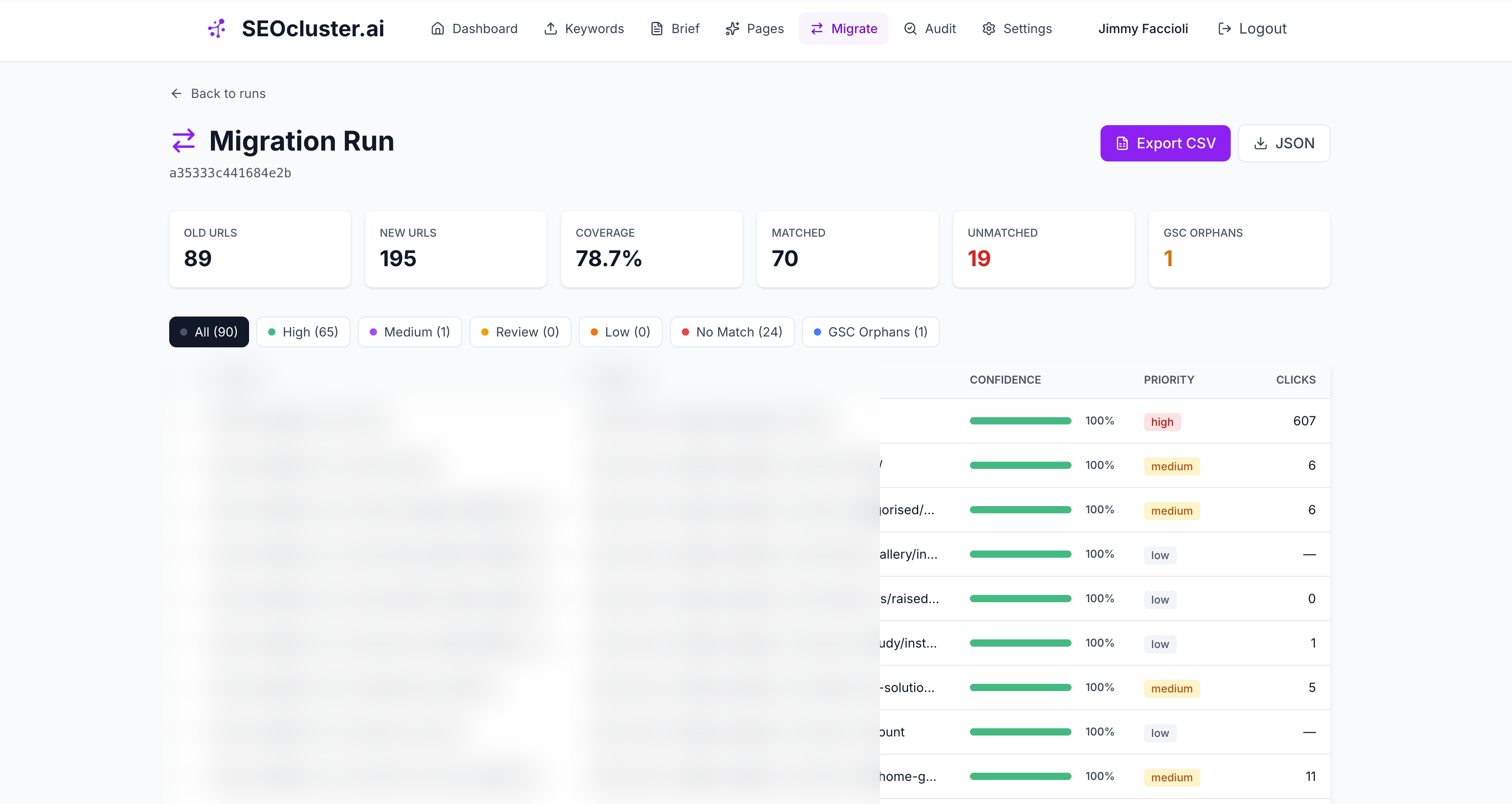
Create redirect maps before traffic drops
Migration traffic losses often come from missing old URLs, weak redirect targets, and low-value pages getting reviewed before high-value pages. SEOcluster.ai gives the redirect mapping step a traffic-first workflow inside the URL Migration Mapper.
Upload crawl exports
Use old and new Screaming Frog crawl files as source data.
Match old to new URLs
Compare URLs, titles, headings, content, and page similarity signals.
Prioritize with GSC
Review pages with clicks and impressions before low-value URLs.
Review risky matches
Use confidence scores to check weak or ambiguous redirect targets.
Redirect mapping inside the migration workflow
Old crawl
Export the current site.
New crawl
Export staging or new URLs.
GSC data
Add traffic priority.
Review
Check low-confidence matches.
Export
Download the redirect map.
Focused redirect map creation
Use the URL Migration Mapper when you need a practical redirect map: old URL, new URL, confidence score, notes, and export.
- Match URLs with crawl and similarity signals
- Review low-confidence redirect targets
- Export a migration-ready CSV for developers
Need the full migration review?
The same URL Migration Mapper also compares old and new crawls, prioritizes GSC-visible pages, and finds missing URLs before launch.
Plan a safer SEO migrationProtect organic traffic during migrations
Use SEOcluster.ai's URL Migration Mapper alongside a pre-launch site audit to find missing URLs, weak matches, and crawl gaps before the new site goes live.